
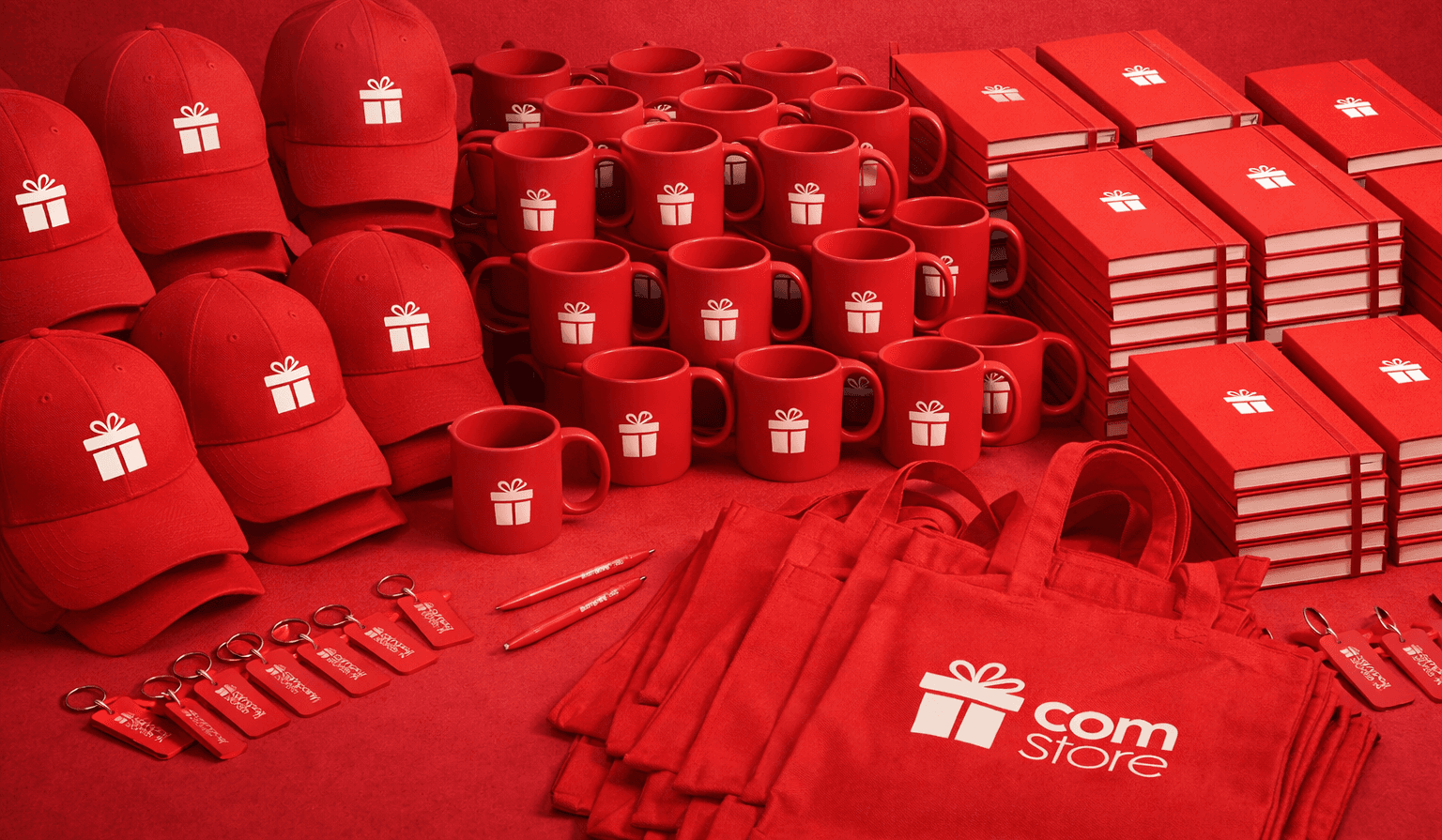
The shift from "corporate gifting" to "branded merchandise" isn't just a vocabulary change – it tracks a real change in how an organization runs the function. Corporate gifting describes occasion-based purchasing: a holiday gift, a client thank-you, decided fresh each time. Branded merchandise describes a planned, year-round program covering onboarding, recognition and events alongside gifting. Which term an organization uses is often a reliable signal of which one it’s actually doing.
Why this is not just semantics
PPAI (Promotional Products Association International), the industry's trade body, has spent 2026 repositioning its own language away from "promotional products" toward "branded merchandise" – a deliberate signal, per PPAI President and CEO Drew Holmgreen, that the category's work now goes well beyond distributing individual products. (For the full terminology shift and what it means for buyers, see CompanyStore's guide to what branded merchandise actually is.) The same logic applies one level down, from “promotional products vs. branded merchandise” to “corporate gifting vs. branded merchandise”: both track the same underlying move, away from one-off, transactional purchasing and toward planned, managed programs.
What this looks like in practice isn’t complicated to spot. An organization that still calls the function corporate gifting tends to procure reactively: someone remembers Diwali is coming, a budget gets approved in October, a vendor gets a rushed brief. An organization that has moved to branded merchandise tends to have a standing calendar, a defined catalog and a single partner managing onboarding kits, recognition rewards and festive gifting as one coordinated program rather than separate annual purchases.
A simple way to read where a program actually sits
This framework isn't drawn from a named industry study, it's a synthesis of three things already established elsewhere in this series, laid side by side: the terminology shift PPAI has documented industry-wide, the operational cost of vendor fragmentation that pushes enterprises toward consolidation and the specific seasonal pattern Indian enterprises follow around Diwali gifting. Individually, those are three separate observations. Read together, they describe a consistent progression rather than three unrelated facts, which is the basis for treating them as stages rather than isolated data points.
The three stages below are CompanyStore's own analysis, built for this piece, not findings from PPAI or any external study.
Three stages tend to recur, regardless of company size:
Stage 1: Ad-hoc gifting
No calendar, no catalogue, no standing vendor relationship. Purchasing happens reactively, usually triggered by an approaching festival or an executive’s last-minute request. Quality and brand consistency vary purchase to purchase, because there’s no continuity of supplier or specification between orders.
Stage 2: Occasion-based gifting
A calendar exists, but it’s narrow, usually just the one or two largest annual events (most often Diwali in the Indian market). The budget is planned in advance for that occasion specifically, but onboarding, recognition and smaller milestones remain unmanaged and are still bought reactively, if at all.
Stage 3: Program-based branded merchandise
Onboarding, recognition, personal milestones and festive gifting are managed as one continuous program under a single accountable partner, with consistent brand execution, defined budget tiers per moment and reporting across the whole calendar rather than a single event.
This isn't a value judgment: a small, single-office company with genuinely light gifting needs may never need to move past Stage 2, and that's a reasonable place to stop. The framework matters most for organizations above roughly a few thousand employees, where the operational cost of staying at Stage 1 or 2 (inconsistent branding, repeated vendor onboarding, no visibility into total spend) starts to outweigh the simplicity of not having a formal program.
What this looks like in practice at CompanyStore
CompanyStore's own history tracks this exact progression. Founded in 2006 as a supplier of custom branded timepieces, a single-product, largely transactional business, it expanded over the following two decades into a full-scope branded merchandise and corporate gifting partner as enterprise buyers began asking for broader, ongoing programs rather than one-off orders. Today it manages merchandise programs across India and internationally for large enterprises, multinational corporations and Global Capability Centres, backed by ISO 27001, ISO 14001, ISO 45001, SMETA, FSC and EcoVadis Silver certification. The shift in what CompanyStore itself sells over 20 years is, in miniature, the same shift this article describes happening across the buyer side of the industry.
FAQ
How do I know if my organization has outgrown ad hoc corporate gifting?
A practical test: if procurement for your largest gifting event each year starts from scratch: a new brief, a re-evaluated vendor, no reference to what worked last time, then the organization is likely still at Stage 1 or 2, regardless of how large the budget has grown.
Does moving from corporate gifting to branded merchandise always mean spending more?
Not necessarily. A managed program often reduces total spend by consolidating vendors and avoiding rushed, premium-priced last-minute orders, even though it may look like a larger single line item once gifting, onboarding, and recognition are combined into one budget.
Is "corporate gifting" the wrong term to use?
No, it's simply the narrower, occasion-based part of the broader category. Using the term isn't a mistake; the distinction that matters is whether the underlying purchasing is still ad-hoc or has become a planned program, whichever word an organization uses for it.
Can a company move from Stage 1 straight to Stage 3, or does it have to pass through occasion-based gifting first?
There's no requirement to pass through Stage 2. Organizations building an engagement program from scratch, particularly newer enterprises or GCCs setting up an India operation. often go straight to a managed, multi-moment program without ever running a narrow, festival-only gifting calendar first.
Is this maturity model specific to Diwali or India?
The three-stage pattern isn't India-specific, but the Stage 2 "occasion-based" step is disproportionately anchored to Diwali in the Indian market specifically, since it's by far the country's largest annual gifting event and the one most organizations formalize a calendar around first.
Sources:
Corrigan, J., & Auping, J. (2026, July 28). As PPAI embraces ‘branded merchandise,’ popular Facebook group follows suit - PPAI - Promotional Products Association International. PPAI - Promotional Products Association International. https://www.ppai.org/media-hub/as-ppai-embraces-branded-merchandise-popular-facebook-group-follows-suit/