
Branded Merchandise and Corporate Gifting Insights
Practical guidance on running branded merchandise and corporate gifting programmes at enterprise scale, written by the CompanyStore team. We cover sourcing, decoration, kitting, warehousing, distribution and programme measurement for organisations shipping to employees and stakeholders across India.
How Do You Handle Corporate Diwali Gifting for a Global, Distributed Workforce?
Sending Diwali gifts to a distributed workforce requires the same backward-planned timeline as any enterprise Diwali program, plus 2 additional layers most single-location gifting doesn't need: - Last-mile delivery to non-metro and Tier-2/Tier-3 addresses within India - Customs-aware logistics for offices and GCC teams overseas
What Does Sustainable Diwali Corporate Gifting Look Like for Enterprises in 2026?
Sustainable Diwali gifting means verifiable sourcing and packaging choices: FSC-certified paper, plastic-free kitting, EcoVadis-rated suppliers. Just the word "eco-friendly" printed on a box isn’t enough and enterprise buyers increasingly expect this distinction.
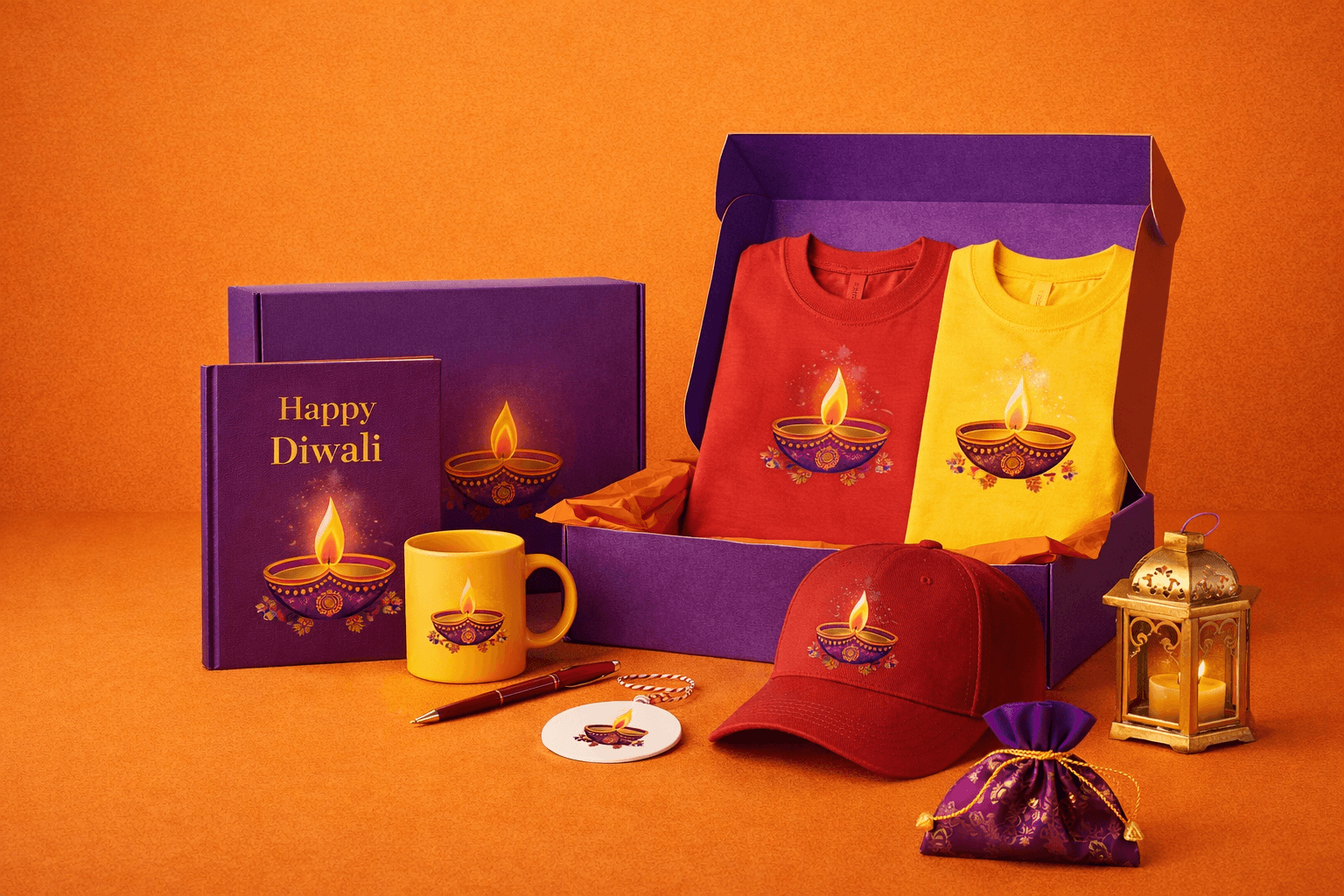
How to Plan for Corporate Diwali Gifting in 2026: Timelines, Budgets and Ideas
Diwali 2026 falls on Sunday, November 8, with the five-day festival running Friday, November 6 through Tuesday, November 10. Enterprise gifting programs should finalize vendor selection and product choices by early September, lock final quantities and branding by early-to-mid October, and treat the first week of November as delivery-confirmation week, not order week. Starting later sharply narrows product choice and delivery reliability.

Retail-Quality vs Standard Promotional Merchandise: Why Product Quality Defines Brand Perception
Product quality measurably changes how recipients perceive the brand behind a piece of merchandise: 78% of consumers report a more favorable view of a brand after receiving a promotional item, and 76% say they're more likely to do business with that brand, according to the 2026 ASI Global Advertising Impressions Study.

How to Evaluate the Field for Best Branded Merchandise Companies for Large Enterprises in India?
There's no single objectively "best" branded merchandise company for every large enterprise as the right partner depends on how well a vendor performs against seven concrete criteria: accountability, regional reach, quality control, product quality, compliance, proven scale and pricing transparency.

What’s the Real Cost of Vendor Sprawl? Single vs Multi-Vendor Merchandise Sourcing
For most enterprises running merchandise programs at scale, consolidating to a single accountable vendor costs less and produces more consistent brand outcomes than spreading sourcing across multiple suppliers, but multi-vendor sourcing is the right call for genuinely specialized categories or where concentration risk on a single supplier is unacceptable. The deciding factor isn't which model sounds safer; it's where the hidden costs of fragmentation actually land.

Which Model Fits a 5000+ Employee Enterprise? In-House vs Outsourced Merchandise Management
For an enterprise with 5000 or more employees, outsourcing merchandise management usually wins on total cost of ownership, speed and scale, but not automatically, and definitely not for every organization. The right model depends on order volume, how customized the program needs to be, and how many regions it has to reach.

The Most Common Branding Mistakes Enterprises Make on Merchandise - and How to Avoid Them
The most common branding mistakes on enterprise merchandise are logo distortion, colour mismatch against brand Pantones, cheap "blank" base products that undercut a premium brand, skipping a physical sample before full production and treating merchandise as a last-minute afterthought rather than a planned spend.

How to Run a Global Branded Merchandise Program Across APAC, Middle East & ANZ
Running a branded merchandise program across APAC, the Middle East and ANZ needs regional sourcing and distribution infrastructure in every area, not a single-country supplier shipping internationally. This distinction matters as while international shipping solves delivery, it doesn't solve local compliance, realistic lead times or the sourcing relationships needed to keep quality consistent once the product has to be made or held in more than one region.
Why Does the Terminology Shift from Corporate Gifting to Branded Merchandise Matters for Enterprises?
Corporate gifting describes occasion-based purchasing: a holiday gift, a client thank-you, decided fresh each time. Branded merchandise describes a planned, year-round program covering onboarding, recognition and events alongside gifting. Which term an organization uses is often a reliable signal of which one it’s actually doing.

The Enterprise New-Hire Kit Playbook: What to Include, What to Skip, and Why
An enterprise new-hire kit should contain a small number of genuinely useful, retail-quality items, a personal welcome note and consistent packaging, all arriving before or on day one, not weeks later.
How to Choose an Enterprise Corporate Gifting Partner: 9 Criteria That Actually Matter
Choosing an enterprise corporate gifting partner comes down to nine evaluation criteria, from single-point accountability to portfolio scale, with unit price mattering least despite usually being the first thing an RFP asks about.

What Should an Enterprise Employee Engagement Merchandise Program Include?
An enterprise employee engagement merchandise program should cover four moments in the employee lifecycle: onboarding, recognition, personal milestones and connection, each with its own approach, budget tier and trigger.
What Is Enterprise Merchandising and How Does It Work?
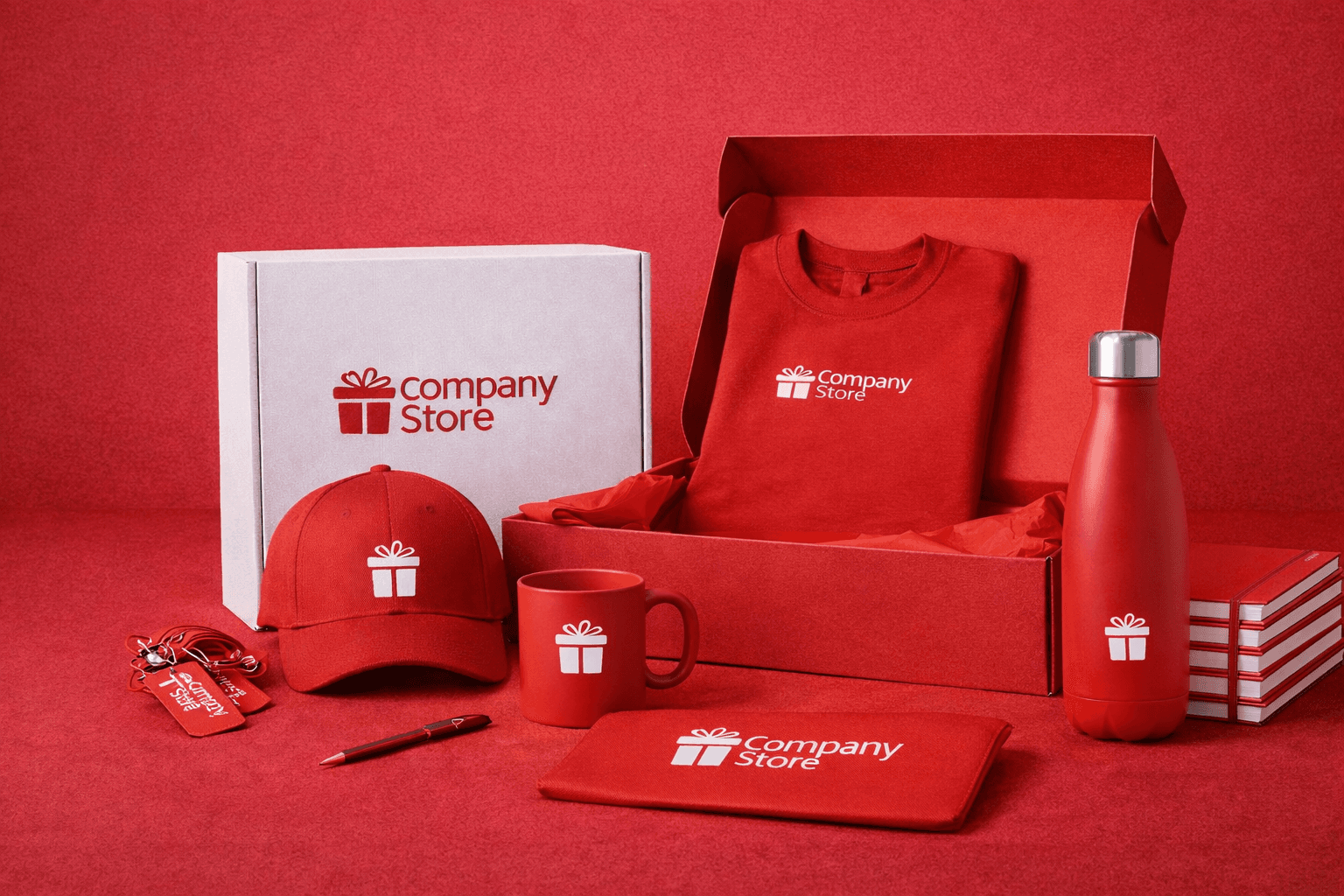
Enterprise merchandising manages an organization's entire branded merchandise supply chain, design, sourcing, manufacturing, quality control, kitting and multi-region fulfillment, as one coordinated program instead of one-off purchases.

What Is Branded Merchandise: The Complete Enterprise Guide
Branded merchandise is a physical product customized with a company's logo, colours or messaging, distributed to employees, clients or partners as part of a deliberate brand or engagement strategy. It differs from promotional products in both scope and intent.